Comparing industrial mechanical clutches requires more than checking a nominal torque figure, because contamination, inertia and maintenance conditions all shape real service life.
Key points
- Size the clutch by peak torque and inertia.
- Match the enclosure to contamination risk while keeping cooling and inspection access in mind.
- Define actuation fail states and spare part availability before purchase.
Enclosures, dust and moisture
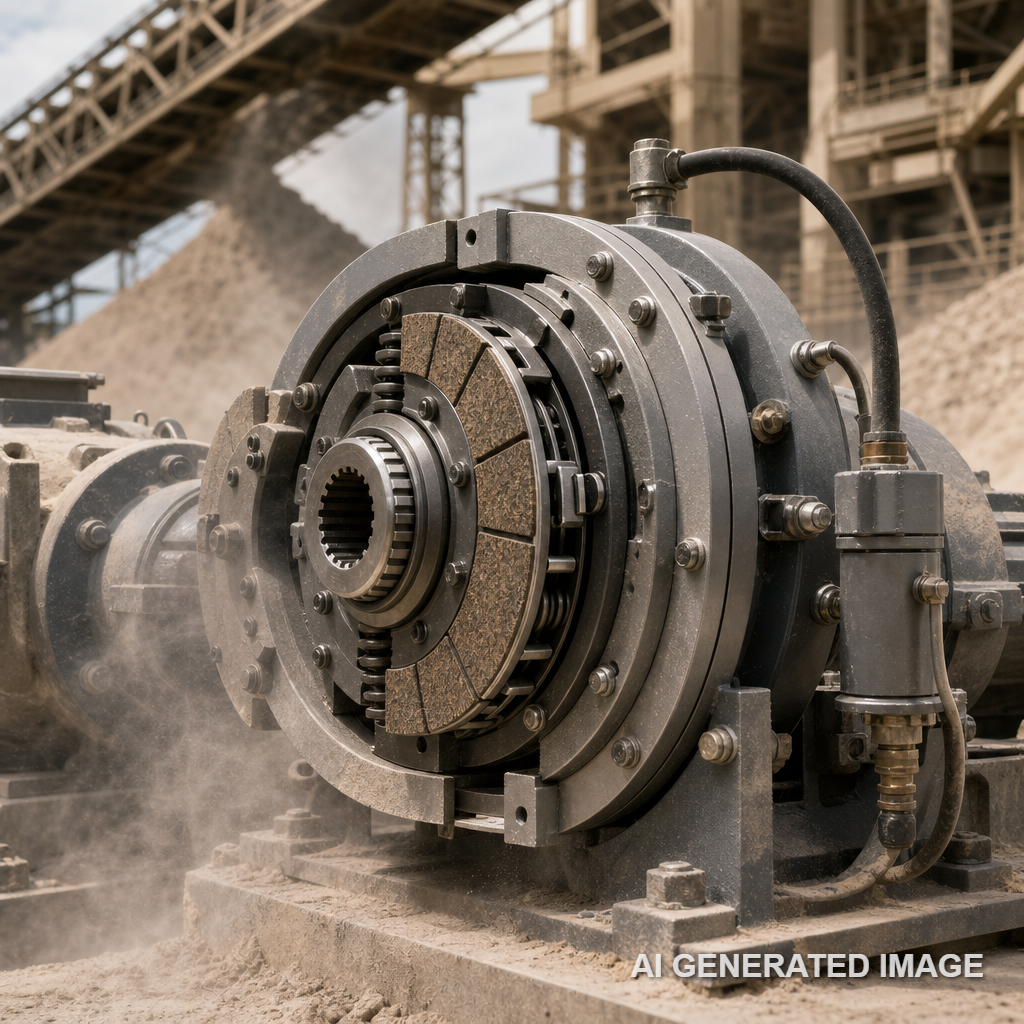
An enclosed clutch generally suits areas where airborne dust, abrasive powder or washdown moisture can reach the friction zone. The housing limits direct contamination, but it can’t guarantee protection on its own. Seals, breathers, cable entries and shaft interfaces may still let particles or moisture inside.
Cooling creates the main design compromise. A sealed housing reduces contamination while limiting airflow and making heat dissipation harder. Inspection can also take longer when technicians must remove covers before checking friction surfaces or clearances. The enclosure therefore needs a service plan, not just a protection rating.
An open design may suit a controlled atmosphere where heat must escape quickly. It demands disciplined housekeeping and inspection, since settled dust can change friction behaviour or hide surface damage. Accumulated material may also obstruct actuation components.
Separate ordinary dust from combustible dust. When fuel, oxygen and an ignition source occur together, dust can create a fire or explosion hazard. Within the EU, a site assessment should determine whether equipment needs conformity with Directive 2014/34/EU (ATEX) for potentially explosive atmospheres; outside the EU, an equivalent local hazardous-area standard applies instead. Housekeeping and ignition control remain part of the wider risk strategy regardless of jurisdiction.
Friction materials, heat capacity and wear control
Friction materials should be compared by coefficient stability, temperature resistance, wear rate and compatibility with dust and moisture. A high coefficient alone proves little. Unstable friction can cause torque variation, engagement shock and faster damage to connected components.
Friction during engagement becomes heat. Repeated slipping, frequent cycling and high inertia loads can exceed thermal capacity even when the nominal torque rating appears adequate. Ask for permissible engagement energy, maximum engagement speed, thermal capacity and duty cycle data before approving a specification.
Use the application’s peak torque, starting torque, inertia, engagement frequency and duty cycle in the calculation. Motor power provides context, but continuous power alone doesn’t describe the clutch load during starting or repeated engagement.
Wear compensation can preserve working clearance and reduce torque loss as surfaces wear. It doesn’t remove measurement duties, though. Technicians should inspect friction thickness, air gap, surface condition, fasteners and overheating marks at documented intervals.
For a wider equipment comparison, review industrial mechanical clutches against the drive’s actual engagement pattern, not its motor rating alone. This approach connects laboratory data with operating conditions and helps expose thermal limits before installation.
Actuation, safety and maintenance access
Manual actuation may suit infrequent operation, provided operators remain protected from stored energy, unexpected movement and excessive force. The machine risk assessment should define safe access and the consequences of an incorrect release or engagement, including how guarding and emergency stopping prevent contact with moving parts during a fault.
Pneumatic actuation supports rapid, repeatable operation, but the supply must remain clean and correctly pressurised. Specify response time, minimum and maximum pressure, filtration, condensation control and clutch behaviour after pressure loss. Contaminated air can cause delayed engagement, incomplete release or inconsistent torque transmission, so the design should also state what the clutch does when pressure is lost, whether it engages, disengages or holds, to prevent an unexpected start.
Hydraulic actuation can provide high force in demanding applications. Leakage, oil contamination and temperature changes need explicit controls. Define the fail state clearly, especially when engagement or disengagement could create a hazardous movement that guarding or an emergency stop must be able to interrupt.
The preferred design lets technicians inspect friction surfaces, measure clearance and replace wear parts without removing unnecessary surrounding equipment. Specify expected availability for friction discs, seals, springs, fasteners and actuation components, since long lead times can outweigh a lower purchase price.
Inspection records should include temperature observations, abnormal noise, engagement quality and measured wear. Planned intervals must reflect duty cycle, contamination and engagement frequency, rather than waiting for visible slipping.
A specification that supports reliable operation
Start with a documented dust and machine risk assessment, then match enclosure, thermal data, actuation controls and service access to measured operating conditions. Choose using peak torque and duty cycle, and confirm spare part availability before purchase. This process reduces avoidable downtime while keeping guarding, emergency stopping and unexpected start prevention within the machine safety system.