Choosing hair extensions is less about the finish in the mirror than about how the method fits your routine. Hair extensions can suit changing hairstyles, daily wear or occasional volume, but each option demands a different level of maintenance, tension control and commitment.
Key takeaways
- Hair extensions should match how often you change styles, wash your hair and exercise.
- Clip-ins offer the lowest commitment because you can remove them at home without a salon reapplication appointment.
- Tape-ins and bonds stay attached during daily activities, so professional adjustment becomes necessary as natural hair grows.
- Pain, tenderness, headaches, redness or thinning signal excessive tension and call for prompt removal or adjustment.
How hair extensions fit different styling routines
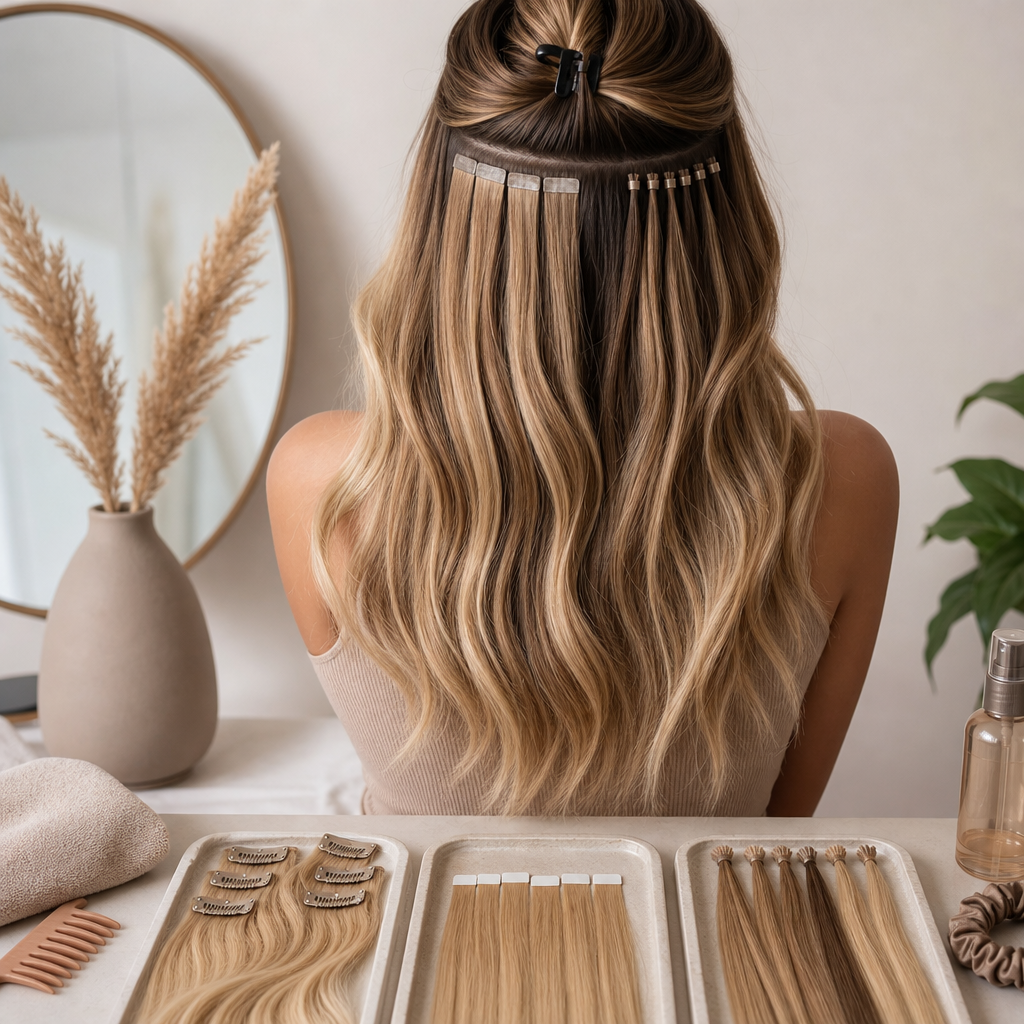
Clip-ins suit people who want control over when they wear added hair. You can attach them at home for an event, a particular hairstyle or occasional extra volume. Their main advantage is temporary use without a salon reapplication appointment. Remove them before washing, curling or changing your parting.
Tape-ins and bonds follow a different pattern. They remain in the hair during daily activities and need professional attention as natural hair grows. The attachments gradually move away from the scalp, which can increase tangling and pulling when maintenance is delayed.
Tape-in systems spread added hair across adhesive sections. Bonds attach smaller strands or sections with a resin or keratin-based connection. This attachment design affects how concentrated the weight and tension feel, so the label alone cannot predict comfort.
Appointment length also varies. The number of pieces, the density of the natural hair, the chosen finish and the stylist’s technique all influence the fitting process. Avoid promises of one universal fitting time. A temporary style may take less planning, while a semi-permanent system requires a maintenance schedule as well as the initial appointment.
What to consider before choosing hair extensions for heat styling
Frequent heat styling does not automatically make one method safe. High temperatures can affect adhesive or bonded areas, while repeated heat can damage the natural hair shaft. Treat heat protection and keeping direct heat away from attachment areas as basic precautions whenever you use heated tools.
Clip-ins offer practical flexibility for changing hairstyles. Remove them before curling, washing or creating a new parting, then reattach them when the style is ready. This makes them suitable for occasional volume and event styling, particularly when the wearer prefers to control the added weight at home.
Semi-permanent systems can support regular styling, but they demand more care around the roots. Keep heated tools away from adhesive or bonded connections, and avoid repeated high temperatures in the same areas. A well-fitted set of hair extensions still requires habits that protect the attachment material and the natural hair underneath.
Think about commitment as well as appearance. Clip-ins provide the easiest reversal. Tape-ins balance longer wear with scheduled maintenance. Bonds create a longer-wear result, but they demand greater commitment to aftercare and timely professional adjustment.
How comfort during sleep and exercise reveals excessive tension
Comfort depends on weight, placement and tension rather than on the method’s name alone. Even a lightweight system can create problems when it sits poorly or pulls at one area. A balanced, heavier arrangement may feel easier to manage than a poorly placed lighter one.
Sleep and exercise can increase friction, pulling and tangling in semi-permanent systems. Hair worn tightly secured places extra stress on the roots. Choose a loose braid or another low-tension style instead of a tight ponytail or bun, especially during activities that create repeated movement.
Pain is not a normal adjustment period. Tenderness, headaches, itching, redness, broken hairs around the hairline and small areas of thinning can indicate excessive tension. Persistent pulling can contribute to traction alopecia, a form of hair loss linked with repeated tension on the follicles.
Act when warning signs appear. Early removal or adjustment gives the best chance of preventing longer-term damage. Dermatology guidance takes a risk-based view: the amount and duration of tension matter more than a simple claim that one method is universally safest.
Delayed maintenance creates another avoidable risk. As attachments move away from the scalp, the hair can tangle and pull at the roots. Treat tape-ins and bonds as maintenance systems, not accessories that require attention only once.
Make the choice match your level of commitment
Use reversibility as the first decision rule. Choose clip-ins when frequent style changes, occasional volume or home removal matter most. Select tape-ins when you accept scheduled maintenance for a longer-lasting result. Consider bonds only when you can follow careful aftercare and accept a higher level of commitment.
Before fitting, assess your routine honestly. Consider sleep, exercise, heat styling and tolerance for salon appointments. After fitting, monitor the scalp rather than waiting for severe discomfort. At the first sign of pain, tenderness or scalp irritation, loosen, remove or professionally adjust the system.
No method suits every wearer. The sound choice is the one that delivers the desired finish without forcing the natural hair to tolerate unnecessary tension.
Author Profile

Latest entries
 Health & BeautyOctober 20, 2026Clip-ins, tape-ins or bonds? Choosing extensions for your routine
 TechnologyAugust 6, 2026Which industrial clutch features matter in dusty and high load environments?
 E-commerceJune 1, 2026High-Quality Machining Spare Parts for Your Industrial Needs
 E-commerceJune 1, 2026Enhance Your Business Success with Expert Marketing Training Services